How to Grow Hydrangeas: The Ultimate Guide to Big, Beautiful Blooms
There’s something undeniably right about hydrangeas. Their big, fluffy flower heads, like clouds condensed into blossoms, just pop up everywhere in the summer. Snowy whites, soft pinks, vibrant blues, deep purples – they bring a touch of classic garden charm, perfect for borders, containers, or even sprawling over a fence. Seriously, nothing quite captures that feeling of summer quite like a big hydrangea bloom.
But let’s be honest, getting those big, beautiful blossoms isn’t always straightforward. I’ve seen some hydrangeas look like they’ve given up on life, just scraggly sticks with no flowers, or worse, the colours didn’t turn out like the picture promised. Hydrangeas are easy to love, but they do have their little quirks and preferences. Getting the most out of them takes a bit of know-how.
This guide? It’s packed with everything you need to turn your hydrangea situation around. We’ll cover how to get massive blooms, keep them vibrant, and keep the plant happy and healthy, whether you’re just starting out or you’re already a green-fingered pro looking to level up your skills.
1. Know Your Hydrangea: The First Step to Success
The biggest mistake I see beginners make is pruning the wrong time. And that leads to problems because hydrangeas don’t all play by the same schedule. Some bloom on old wood (that means last year’s stems), while others rely on new wood (this year’s growth).
Let’s meet the main players:
- Bigleaf Hydrangea (Hydrangea macrophylla): Think ‘Mophead’ and ‘Lacecap’ types. These are the classic ones, often called “Annabelle” types too, though technically those are Smooth Hydrangeas. Bloom on old wood (mostly, with a few exceptions!). Here’s the fun part – many colours change! Want blue? You need acidic soil (pH 5.2–5.5). Pink? You need alkaline soil (pH 6.0–6.2). These prefer morning sun and dappled afternoon shade, and they hail from Zones 5–9. In very cold areas, they might need a bit of winter protection.
- Panicle Hydrangea (Hydrangea paniculata): Varieties like ‘Limelight’, ‘Pinky Winky’, and ‘Vanilla Strawberry’ are powerhouses. Bloom on new wood. This means they’re pretty reliable, even after tough winters. They handle sun better than Bigleaf types, needing full sun (6+ hours) for the biggest blooms, and they’re tough, Zone 3–8. Bonus: Their blooms often start white and turn pinkish as they mature.
- Smooth Hydrangea (Hydrangea arborescens): The ‘Annabelle’ type is the poster child here. Bloom on new wood. They produce huge, spherical white flower clusters. They’re super hardy, Zones 3–9, and surprisingly, some varieties can bloom well in shade too. Great for beginners!
- Oakleaf Hydrangea (Hydrangea quercifolia): Unique blooms and foliage. Bloom on old wood. They have conical white flowers and, get this, their leaves turn absolutely stunning in the fall. They prefer part shade (especially in hot climates) and are drought-tolerant once established, Zones 5–9.
- Mountain Hydrangea (Hydrangea serrata): A bit smaller, but lovely. Bloom on old wood. They feature delicate lacecap flowers and are very cold-hardy, Zones 5–9.
Pro Tip: Seriously, check the plant tag when you buy it. If it doesn’t clearly state the species (like Hydrangea macrophylla or Hydrangea paniculata), don’t buy it! Knowing exactly which hydrangea you have dictates how you need to care for it and when you prune it.
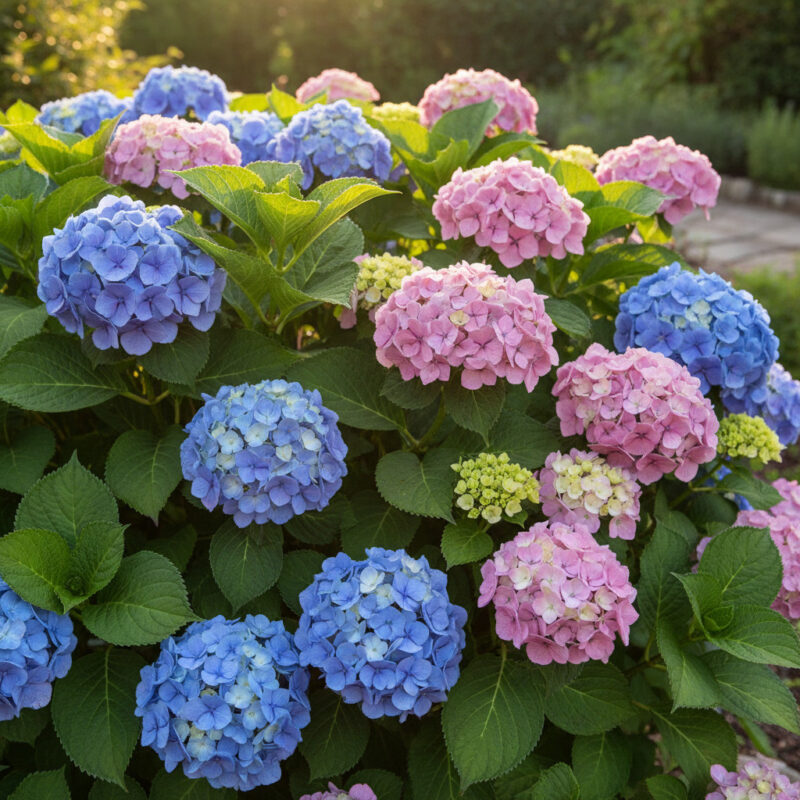
Bigleaf Hydrangea
2. Planting: Getting the Foundation Right
Think of this as setting up your plant’s home. Get it right from the start, and you’ll save yourself a lot of grief later.
When to Plant: Spring, after the danger of frost has passed, or early fall, when the plant can establish its roots before the harsh weather hits.
Where to Plant:
- Light: For Bigleaf and Oakleaf types, morning sun and afternoon shade is ideal. Panicle and Smooth types can handle more sun, even full sun in cooler areas (Zone 7 and below), but in warmer zones, afternoon shade helps keep them happy.
- Soil: They like rich, well-draining soil. Basically, good loam with lots of organic matter added. Hydrangeas hate being constantly wet feet.
- Spacing: Give them room! Space them according to their mature size, which is listed on the tag. Don’t pot-size it!
How to Plant:
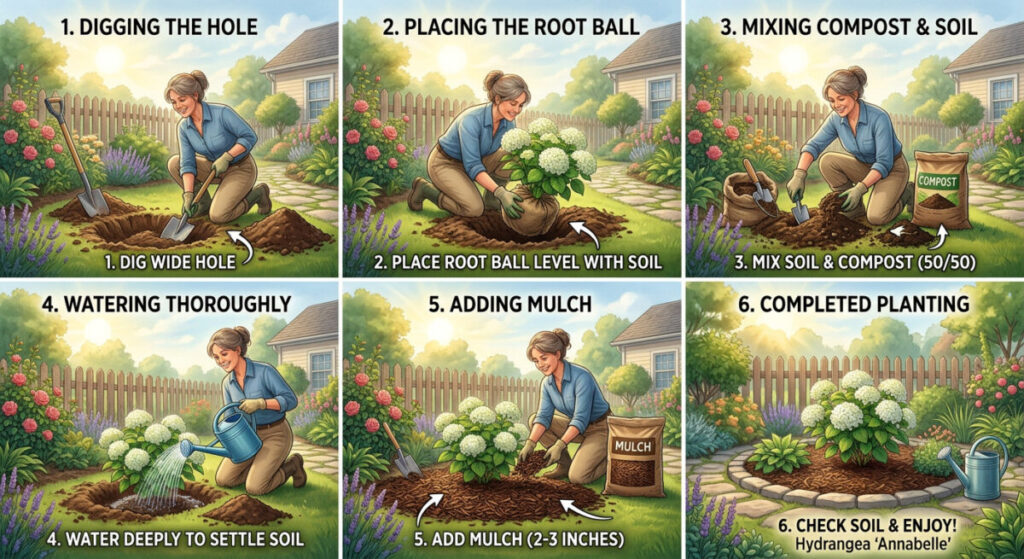
- Dig a hole twice as wide as the root ball, but only as deep as the root ball itself. Don’t bury it deeper!
- Mix native soil with compost (about half and half) in the hole.
- Set the plant so the top of the root ball sits level with the surrounding ground. Planting too deep is a recipe for rot.
- Backfill the hole, water it thoroughly, and mulch around the base with 2–3 inches of material like pine bark or shredded leaves. Keep the mulch a few inches away from the main stem.
3. Water: Hydration Station!
Hydrangeas are named after the Greek word for water (hydra). They like consistent moisture, especially when getting established or forming buds.
- Year 1: Give them a good deep drink 3 times a week. Think about it like this: a gallon per plant per watering.
- After Establishment: Usually 1–2 deep waterings a week, aiming for about an inch of water total per week (a rain gauge helps!).
- Signs: Stick your finger in the soil. If it feels dry an inch down, it’s time to water.
- What if it rains a lot? Good for them! But ensure the soil isn’t staying soggy.
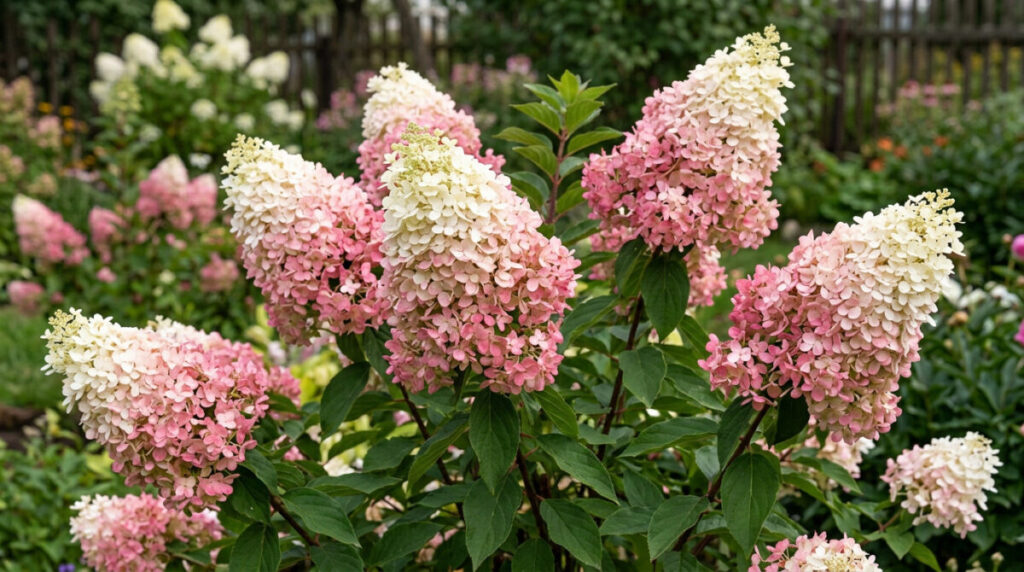
Panicle Hydrangea
4. Fertilizing: Feeding Time!
Think of fertilizer as giving your hydrangea a little energy boost.
- Use a balanced fertilizer (like 10-10-10) in early spring.
- Switch to a fertilizer higher in phosphorus (blooms!) once flower buds start forming, maybe mid-spring or early summer.
- Always follow the package directions! Too much fertilizer can burn the roots.
- Organic options like compost tea or well-rotted manure are great too!
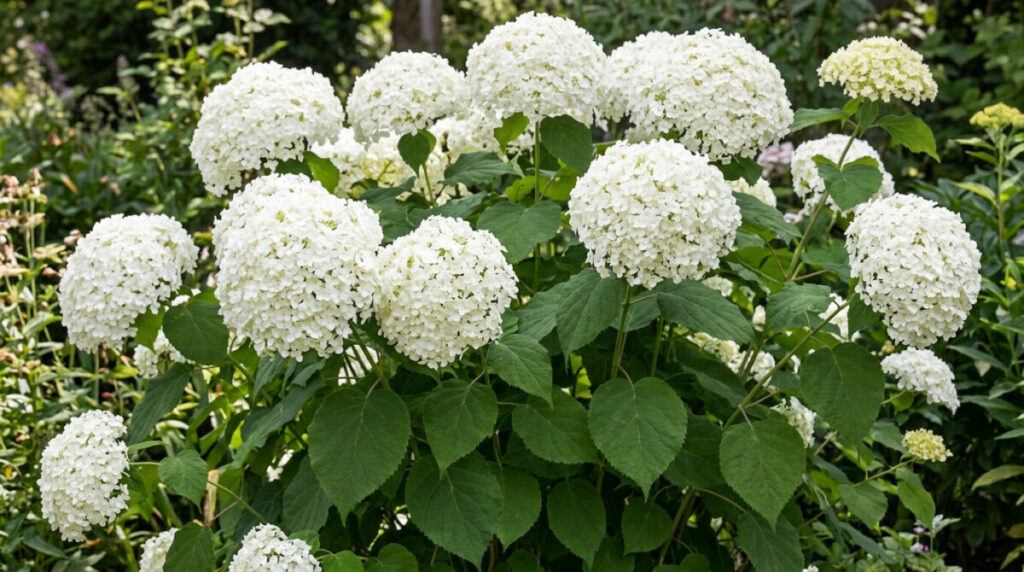
Smooth Hydrangea
5. Pruning: Shaping Up!
Pruning is key for keeping hydrangeas healthy and encouraging more blooms. But the when and how depends heavily on the type.
- Old Wood Bloomers (Bigleaf, Mountain, Some Smooth): Prune after they bloom, but be gentle. Remove only dead or weak stems. Major shaping or heavy pruning should wait until after they finish flowering. This is because you risk cutting off the flower buds for the next year.
- New Wood Bloomers (Panicle, Most Smooth): Prune in late winter or early spring before new growth starts. This is when they send out their flowering stems for the year. You can be more drastic here – cutting back by a third or even half encourages bushier growth and more flowers. Removing old wood also keeps them tidy.
Rough It Out: If a stem looks really unhealthy or damaged, just cut it out anytime. Hydrangeas are resilient!
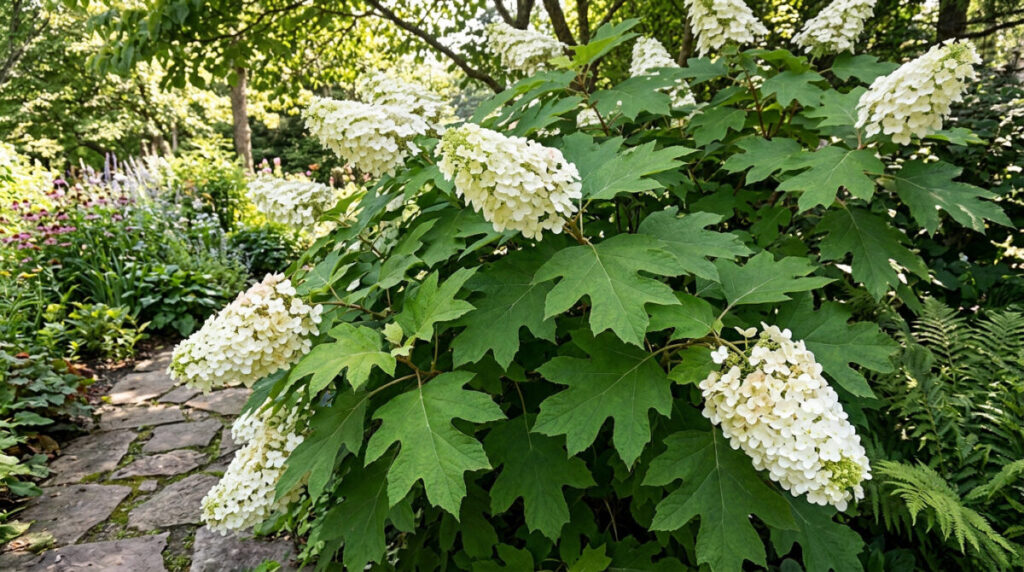
Oakleaf Hydrangea
6. Changing Colors: Blue or Blush?
For Bigleaf Hydrangeas that bloom on old wood (like standard Mopheads or Lacecaps), the flower colour is often determined by the soil pH. Want blue? Aim for acidic soil (add sulfur or peat moss). Want pink? Aim for alkaline soil (add lime). The purple often just shows up if the soil is neutral.
- How to Test: Soil test kits are easy to find and use.
- How to Change: It takes time and consistent soil conditions to truly shift the colour. Don’t expect overnight miracles!
- Important Note: This pH thing only affects the flowers for old wood bloomers. It doesn’t change the foliage. And remember, the colour change process takes time, especially if you’re adjusting the pH significantly.
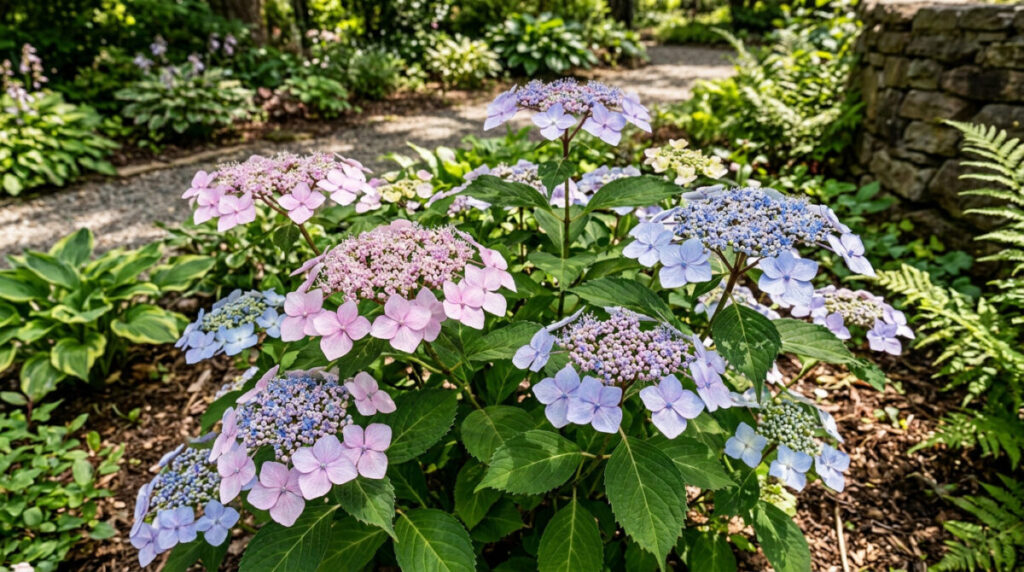
Mountain Hydrangea
7. Common Problems: What if Your Hydrangea Sucks?
Don’t worry, they’re not sucking on you personally! Common issues:
- No Blooms: Usually due to pruning wrong (cutting old wood bloomers too late or new wood bloomers too early), not enough sun/light, too much shade for the type, or planting too late in the season so buds didn’t have time to set.
- Leggy Growth: Stems getting too long and spindly with few leaves. Usually a sign of insufficient light or over-fertilizing.
- Pest Issues: Aphids, spider mites, or Japanese beetles can be problems. Regular inspection and appropriate treatment (often a strong blast with water first!) help.
- Disease: Powdery mildew or leaf spot can occur, often in humid conditions or if the foliage stays wet. Good air circulation and avoiding overhead watering can help prevent this.
8. Winter Care: Through the Tumbleweed!
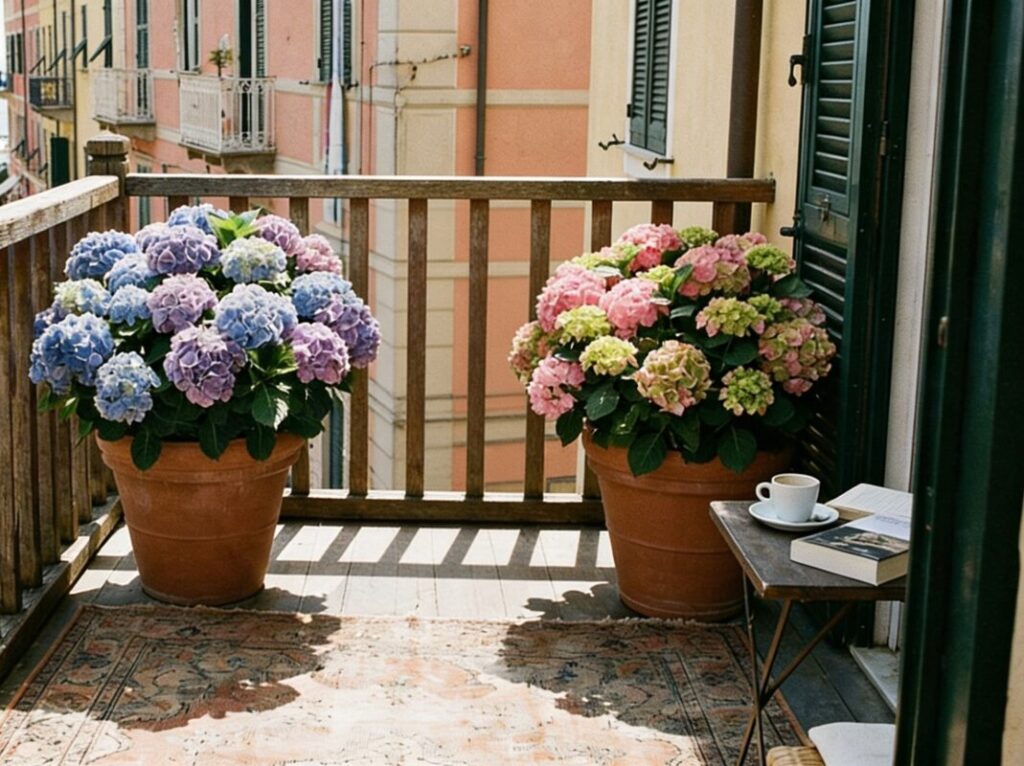
Most hydrangeas are pretty hardy. Good drainage is key to preventing root rot in cold, wet winters. For potted hydrangeas, bringing them indoors or providing some root protection (like mulching heavily) can help in severely cold or snowy areas. Otherwise, let them brave the cold!
9. Containers: Gardening on the Go!
Growing hydrangeas in pots is totally doable, especially Panicle and Smooth types. Use a large pot with drainage holes, fill it with quality potting mix (add compost!), and remember to water more frequently in pots, as they dry out faster. Fertilize regularly too.
So there you have it! Armed with this knowledge, you should be well on your way to growing the happy, healthy, bloom-producing hydrangeas you’ve always dreamed of. What’s your hydrangea adventure starting with?